
Successful marketing works because it is built on understanding customers before creating campaigns. Many people assume memorable advertising is what makes a brand successful, but companies like McDonald's invest heavily in learning what matters to their audience and using those insights to shape consistent customer experiences. That customer-focused approach offers valuable lessons for service businesses, including day spas that want to build stronger, longer-lasting client relationships.
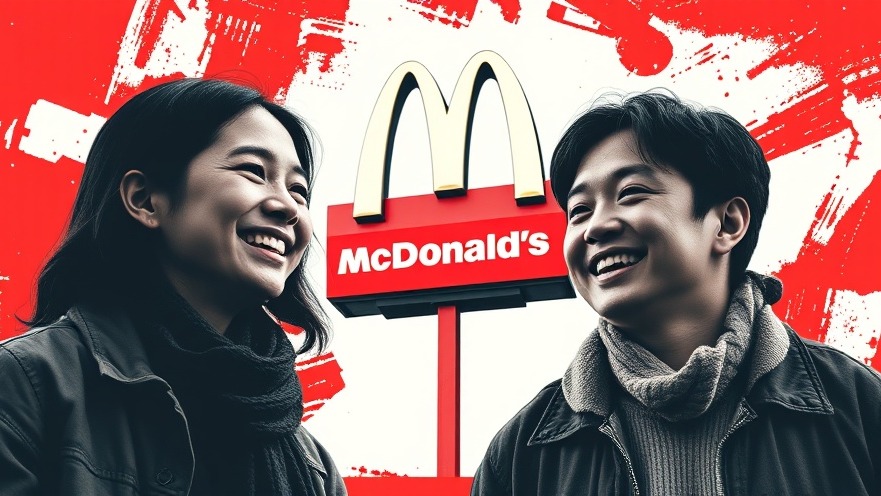
The System Behind McDonald's Marketing Success
Marketing is often judged by what customers see. A memorable commercial, a catchy slogan, or a clever social media campaign may capture attention, but those visible elements are usually the result of decisions made long before a campaign reaches the public.
The strongest marketing systems begin with understanding customers, identifying meaningful patterns, and turning those insights into consistent business decisions.
McDonald's provides a useful example of how that process can work at scale. Rather than relying solely on creative instincts, the company has increasingly emphasized customer research, cultural observation, and audience insights when developing many of its campaigns.
The advertisements may be what customers remember, but the planning behind them is what gives those campaigns lasting relevance.
For day spa owners, the lesson extends well beyond advertising. The same disciplined approach to understanding clients, organizing feedback, and improving customer experiences can help service-based businesses strengthen relationships, encourage repeat visits, and build trust over time.
The strongest marketing often begins long before a campaign is ever created.

Great Marketing Starts Long Before the Advertisement
Advertising is only the visible part of a larger marketing process. Before a promotion is created, customer information must be gathered, reviewed, and turned into clear decisions about timing, messaging, and delivery.
McDonald’s supports this process by looking for patterns in customer interests and behavior.
Those patterns help its marketing teams decide which ideas deserve attention, which trends fit the brand, and how a campaign can connect with an audience that already has established interests.
McDonald's has spent decades refining its marketing strategy while continuing to adapt to changing consumer interests and cultural trends.
Its marketing teams evaluate emerging behaviors, particularly among younger audiences, to better understand which shifts may have lasting relevance before investing in new campaigns or brand initiatives.
This structured approach reflects an important principle in customer engagement. Rather than reacting to every emerging trend, the goal is to identify meaningful patterns that can inform marketing decisions and create campaigns with stronger long-term relevance for the intended audience.
Research into consumer behavior consistently shows that marketing decisions become more effective when they are supported by multiple sources of customer insight instead of creative assumptions alone.
Organizations that combine observation, customer feedback, performance data, and market trends are better equipped to identify meaningful opportunities before investing in a campaign.
McDonald's applies this thinking by developing campaigns that reflect customer interests already gaining momentum rather than relying only on creative concepts developed inside the organization.
Dr. Marcus Collins, Clinical Assistant Professor of Marketing at the University of Michigan Ross School of Business, former Chief Strategy Officer at Wieden+Kennedy New York, who previously worked on Apple's iTunes and Nike sports marketing initiatives, and author of For the Culture: The Power Behind What We Buy, What We Do, and Who We Want to Be, has written extensively about how culture and the communities people identify with influence purchasing decisions.
His work suggests organizations are better positioned to develop meaningful marketing strategies when they first understand the social and cultural influences shaping customer behavior rather than relying primarily on creative messaging to generate interest.
From an operational standpoint, the advertisement is simply the visible outcome of a much larger planning process.
The research, evaluation, and decision-making that occur beforehand help explain why many McDonald's campaigns feel familiar when customers encounter them on television, social media, or through the company's mobile app.
Rather than introducing completely new ideas, the campaigns often connect with conversations and interests that customers are already having.
Marketing becomes more effective when businesses stop asking what they want to promote and start asking what customers already care about.

Listening Became Part of the Marketing System
One of the more interesting aspects of McDonald's marketing strategy is that customer research is not treated as a one-time project. Instead, it has become part of an ongoing operational process.
The company has described conducting what it calls "Fan Truth Road Trips," where members of its marketing team spend time in places where customers naturally gather.
Rather than limiting research to focus groups or survey responses, they observe how people interact, what topics they discuss, and which cultural trends are gaining momentum.
Observing customers in everyday settings often reveals insights that traditional surveys alone may miss. While people can describe their preferences during research sessions, their conversations, habits, and interactions frequently provide additional context about what influences their decisions.
Behavioral research supports this approach because observing people in natural environments helps organizations understand how interests develop and how customer behavior changes over time.
That same principle has influenced some of the most widely recognized thinking in modern marketing, where customer understanding is viewed as the foundation for effective business decisions rather than simply a step in campaign planning.
Philip Kotler, Professor Emeritus of Marketing at Northwestern University's Kellogg School of Management, author of the internationally recognized textbook Marketing Management, co-author of dozens of books on marketing strategy, and widely regarded as one of the founders of modern marketing theory, has consistently emphasized that successful organizations begin by understanding customer needs before developing products, services, or promotional campaigns.
His work supports treating customer research as an ongoing business process that continually informs marketing decisions instead of viewing research as a one-time planning exercise.
In practice, this type of research often takes marketing professionals into college campuses, neighborhood shopping centers, public parks, and community events where they can observe patterns that may never appear in a spreadsheet.
Rather than focusing only on numbers, they pay attention to fashion trends, entertainment interests, technology habits, everyday conversations, and the ways different groups naturally interact with brands.
As those observations accumulate over weeks and months, they become part of a broader decision-making process.
By comparing recurring patterns instead of isolated data points, marketing teams are better equipped to recognize emerging interests, evaluate changing customer behavior, and make more informed decisions about future campaigns and customer engagement strategies.
Listening becomes more valuable when it is treated as an ongoing business practice instead of an occasional project.

Why Cultural Relevance Cannot Be Manufactured Overnight
One example of this research process appeared in McDonald’s 2024 “WcDonald’s” campaign, which drew inspiration from the brand’s long-running presence in anime and manga culture.
For years, creators and fans had used fictional McDonald’s-inspired restaurants, often under names such as “WcDonald’s,” before the company developed an official campaign around that familiar convention.
Instead of trying to introduce a completely new idea, McDonald's identified a cultural connection that had been developing for years among anime fans.
The company treated that existing interest as a starting point, then built a coordinated campaign that included limited-edition packaging, a specialty Savory Chili WcDonald's Sauce, animated shorts, and digital manga content designed to deepen engagement with an audience that already appreciated the culture.
This approach reflects an important marketing principle. Campaigns are often more effective when they organize and expand genuine customer interests through a well-planned execution strategy rather than attempting to persuade people to embrace something they have never shown interest in before.
Brand strategy specialists frequently point to authenticity as one of the strongest drivers of customer engagement.
Audiences, particularly younger consumers, often recognize when a campaign genuinely reflects their interests versus when it simply follows a popular trend.
Campaigns that build upon authentic cultural connections typically create stronger engagement because they feel natural rather than forced.
Fans quickly noticed familiar visual details throughout the packaging and promotional materials. Instead of presenting a disconnected promotion, the campaign reflected conversations and interests that already existed within the anime community, allowing customers to recognize the brand's understanding of that audience.
From a marketing systems perspective, this illustrates the value of aligning campaigns with established customer interests instead of attempting to manufacture relevance after the fact.
When customer research, cultural awareness, and campaign execution work together, marketing becomes a natural extension of the audience's existing interests rather than an interruption competing for attention.

Customer Loyalty Is Built Through Consistent Experiences, Not One-Time Campaigns
A successful marketing campaign may encourage someone to visit a business for the first time, but deciding to return usually reflects a combination of factors.
Consistency, product or service quality, convenience, value, and the overall customer experience all influence whether a first visit develops into an ongoing relationship.
Customer loyalty often grows through repeated interactions that meet or exceed expectations while reinforcing a brand's reliability over time. Although convenience, pricing, and personal preferences also influence repeat business, dependable experiences help strengthen trust and give customers greater confidence when deciding where to return.
McDonald's puts this principle into practice by designing its restaurants, mobile ordering, drive-thru service, loyalty program, and digital experiences to work together as part of a recognizable customer journey.
While individual restaurants and markets may differ in execution, the company aims to provide familiar branding, consistent ordering experiences, and service standards that customers can generally expect across many locations.
When those systems operate together effectively, they reduce uncertainty and reinforce customer confidence from one interaction to the next.
Rather than relying on a single positive visit, the company seeks to build familiarity over time so customers repeatedly experience a service process that supports value, quality, convenience, and overall confidence in the brand.
Customer experience professionals often describe loyalty as the result of an entire service system rather than a single transaction. Digital ordering, in-person service, appointment scheduling, follow-up communication, problem resolution, and everyday customer interactions all work together to shape how people evaluate a brand over time.
That systems-based view has become a guiding principle in customer experience management, where long-term relationships are strengthened through consistent performance across every stage of the customer journey rather than through isolated moments of exceptional service.
Jeanne Bliss, founder of CustomerBliss, a pioneer of the Chief Customer Officer role, who has led customer experience and loyalty initiatives at Lands' End, Mazda, Coldwell Banker, Allstate, and Microsoft, and author of Chief Customer Officer 2.0 and Would You Do That to Your Mother?, has spent more than three decades helping organizations improve customer experience systems.
Her work emphasizes that businesses are more likely to build long-term customer loyalty when every stage of the customer journey consistently delivers on the brand's promises, allowing trust to develop through repeated positive experiences rather than isolated moments of excellent service.
McDonald's applies this principle by designing its mobile ordering, drive-thru, and in-restaurant experiences to reflect a recognizable brand experience, even though execution can vary between individual restaurants and markets.
By aligning its ordering channels, branding, and customer interactions around consistent service expectations, the company seeks to create an experience that supports customer confidence and encourages repeat visits over time.
Marketing may attract attention, but consistent experiences play an important role in encouraging customers to return.
When businesses repeatedly deliver dependable service, clear communication, and reliable quality, they create expectations that can strengthen trust and support long-term customer relationships alongside other factors such as value and convenience.
Each customer interaction also provides an opportunity to reinforce those expectations. Over time, consistently meeting them helps create a more predictable experience that supports both customer confidence and ongoing engagement.

What Spa Owners Can Borrow Without Copying McDonald's
The value of McDonald's marketing system does not depend on serving millions of customers. The underlying principles can be adapted to businesses of every size, including independent day spas.
Independent spa owners often have opportunities for direct client conversations that many larger organizations try to recreate through formal research programs and customer feedback systems.
Because many clients return for ongoing services, each appointment can provide additional insight into their goals, preferences, concerns, and expectations while strengthening the relationship over time.
That information becomes most valuable when it is gathered consistently and reviewed alongside other sources of customer feedback.
Combined with booking trends, follow-up communication, and client comments, these observations can help spa owners make more informed decisions about service improvements and future marketing efforts.
Instead of collecting feedback only when planning a promotion, spas can build simple routines that capture useful information throughout the client journey.
Front desk staff can document recurring service questions, providers can identify frequently requested treatments or common consultation themes, and managers can review those observations regularly to identify patterns that may improve both daily operations and future marketing decisions.
Appointment history, seasonal booking trends, follow-up communication, online reviews, and client satisfaction feedback each contribute a different perspective on customer behavior.
When those sources are evaluated together and interpreted carefully, they can provide a stronger foundation for refining services, improving communication, and planning future client engagement while respecting appropriate privacy practices and professional standards.
Each interaction becomes more valuable when it contributes to a broader understanding of client needs instead of remaining an isolated customer experience.
Many spa business consultants recommend documenting client observations in a consistent and organized way so they become part of everyday business planning rather than remaining informal conversations.
Reviewing those patterns on a regular basis allows owners to identify recurring needs earlier, strengthen service consistency, and make more informed decisions about future promotions, treatment offerings, and client communication.
For example, a spa may notice that questions about stress management increase during particularly busy seasons.
Recognizing that pattern allows the business to proactively develop educational resources, seasonal wellness packages, or appointment reminders that address those concerns before they become repeated requests at the front desk or in treatment rooms.
Over time, those small improvements help transform individual conversations into a reliable system for continuously refining both the client experience and the business itself.

The Businesses That Keep Learning Usually Keep Growing
Customer expectations never remain fixed. Technology changes how people communicate. Cultural trends influence purchasing decisions. New generations bring different priorities, habits, and preferences into the marketplace.
Businesses that continue learning are often better prepared to adapt when those changes occur.
McDonald's illustrates how sustained marketing performance can be supported by continually refining the processes behind individual campaigns rather than relying on creative ideas alone.
Customer observations, performance data, and market trends can become part of an ongoing evaluation process that helps marketing teams identify opportunities to improve messaging, customer experiences, and future campaign planning.
Spa owners can apply the same operational mindset by reviewing customer engagement as an ongoing business process instead of an occasional marketing task.
Recording client feedback, evaluating service patterns, refining communication, and making thoughtful adjustments throughout the year help create a business that responds to changing client needs while continually improving the overall customer experience.
Individual promotions will always have a place, but they produce stronger results when they are supported by well-managed service processes and informed by a steady flow of customer insight.
Consistent improvement behind the scenes helps businesses adapt as customer expectations evolve while strengthening both service delivery and long-term customer relationships.
Organizations that build customer learning into their everyday operations are often better prepared to recognize changing needs, refine their decision-making, and improve the experiences they deliver.
Over time, that commitment to continuous improvement can become one of the most reliable foundations for remaining relevant, trusted, and competitive.
Looking to deepen connections with your clients? Discover more insights inside Customer Engagement, or explore additional expert-driven spa coverage on Spa Front News.
---
Written by the Spa Front News Editorial Team — proudly published by DSA Digital Media.


Write A Comment